

Building Strong Relationships at School
Building Strong Relationships at School
At the recent SEND Futures conference, the Kingston PCF held a workshop with series of educators and other professionals where we talked about the key priorities of parent carers. These priorities were based on what we heard in our recent Inclusion in Schools Surveys.
Good Practice
As a group, participants shared good practice that is already happening in local schools without the need for an EHC Plan in place but as part of day to day inclusion, also known as the ordinarily available provision. You can read more about the Ordinarily Available Provision here on the Local Offer.
Effective Communication with Parent Carers
Home-School Communication system
- Having a home to school book
- Social stories shared before a trip so can be shared at home too
- Communication books/charts/sheets
In Person Opportunities
- Opportunities to connect in person
- Available at pick up/drop off
- Running meet the teacher mornings
- Parents can spend time in the classroom
- Holding conversations with parent carers on day to day support, not just annual reviews
- Regular SEND meetings
- Inclusion team on the gate each morning to support the children and/or parent carers
- HT and Senco on gate every morning for ad hoc check-ins
- Relevant parent workshops based on a survey of what they want
- Parents evening
- SENDCo parents evening for any parent, not just on SEND register
- SEND coffee mornings or afternoons
- Family support worker who offers drop ins
- Setting a regular time for discussing how things are going with school and with the family
- Meetings with SENCO/ class teacher in attendance so can capture all experiences, views and wins – this is even better if at consultation stage (before decisions made)
- Personal plans with parent and child impact recorded
Learning Support
- Parent workshops on maths and english, sent out to parents if they can’t attend
- Phonic videos on website to support parents (and pupils)
- Learning plans are collaborative with parents
Supportive environment
- Build trusting relationships with parents
- Using parent champions/ having a SEND parents whatsapp groups
- Having open, honest and caring two-way conversations between school and parents
- Leadership not dismissing parent, child and family views
Accessible Classroom Environment And Reasonable Adjustments
Sensory Adjustments
- Every class has a box of fidgets for children
- Nurture has additional tools if needed
- Nurture den and retreat children can access
- Regulation room
- Internal sensory/movement circuit children can access independently, sometimes following modelling by a TA
- Allowance to wear loops (in ear defenders)
- Uncluttered displays
- Disused space turned into a wellbeing/chillout space
- Movement breaks and brain breaks, knowing which is needed
- Quiet spaces
- Movement break posters/space for this
- Sensory circuits
- Movement breaks built into school timetable
- Displays/workng walls -consider more neutral background, less is more, good examples – children’s work
- Reduction in visual stimulus – fewer colours, fewer displays, fewer shiny surfaces, clear slides, information on boards only
Learning Adjustments
- Personalised workspace (only when requested so in collaboration with child)
- Considering cognitive load – recall, reduce language, repetition and dual coding (providing vocabulary). Model, “I do, we do, you do…”
- Maths pack for all children
- Resources for all: concrete, visual, accessible and clearly labeled
- Small group work with different teachers so children get to know staff they wouldn’t usually see
School-wide Adjustments
- Executive function support – task planners, chunking, visual supports, lesson timetables
- Communication-friendly environments – whole class visual timetable with active use
- Consideration of natural surfaces ie plants, windows, views, air quality and sound quality
- Leave passes during whole class discussion for noise overwhelm (an adult to discuss)
- Uniform adjustments
- Visuals ie, visual timetable, now/next, ALD boards, mini schedules, objects of reference, timers
- Acoustic environment considerations for those deaf/hearing impaired children and young people, felt on chair legs, in trays and pots
- Large font text in class
- Large print books for visual impairments in library to make inclusive
- Asking parents what adjustments are needed for their child
Creating Sense of Belonging & Community
- Internal alternative provision open every afternoon that pupils know they can access
- Attendance support using a holistic approach when helping to improve attendance
- A “safe person” around
- Soft starts/delayed starts
- Address every child by name every morning
- Careful consideration of meaningful inclusion at an individual level as part of the whole schools (and AFC) ethos
- Celebrations – pupil of the day where each day 1 child receives compliments from others, name “up in lights”
- A warmth in approach to emotional based school non-attendance
- Inclusive clubs and trips and providing priority places
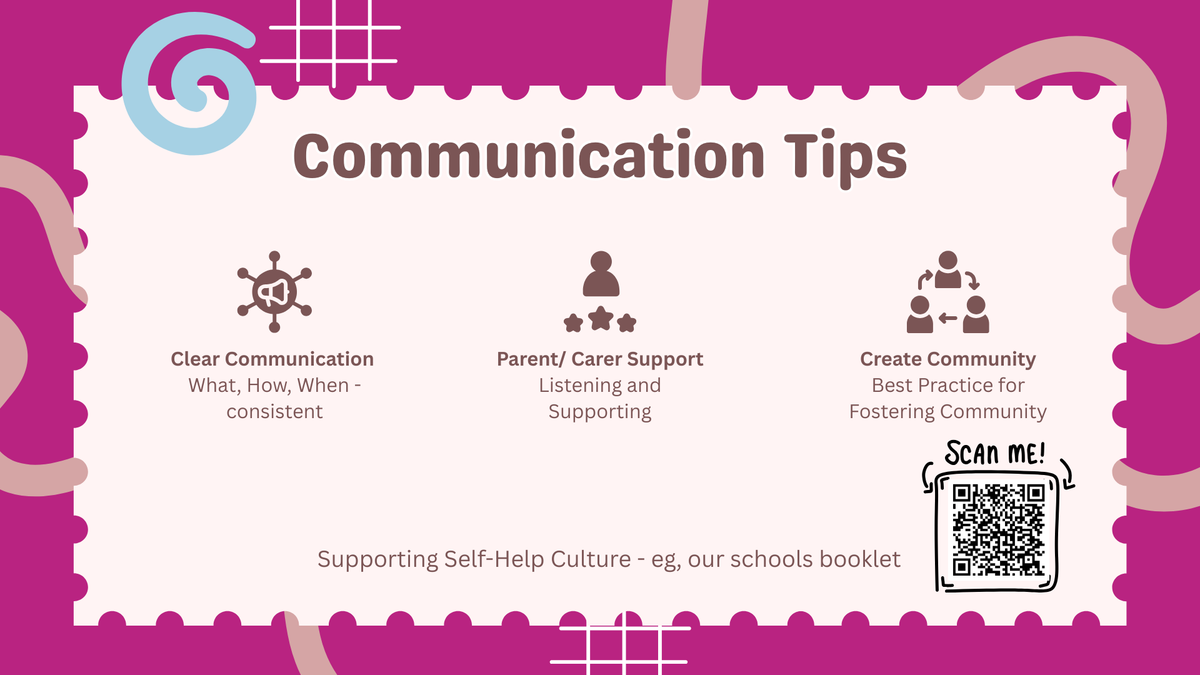
As part of the presentation we suggested there were some key ways parent carers could be supported by:
- Providing regular and clear ways for two-way communication
- Offering a supportive environment
- Create a community to prevent isolation for SEND families
Our advice included a link to our Guide to Inclusion in Kingston Schools which is a great way that families can find out what information is available on each school website as well as more information as to what you can expect from school